Best routes and stops for road trips to Brisbane, including fuel, overnight spots, and scenic alternatives? When it comes to getting to Brisbane, it’s not just a case of hitting the fastest highway. I’ve learned the hard way that the best trips are all about finding a balance between driving time, fuel costs, where you’re going to overnight, and the state of the roads – that’s whether it’s just wet or if we’re in the middle of a bushfire season. Whether you’re making the trip from Sydney, Melbourne, Adelaide or up from North Queensland, doing a bit of planning beforehand will save you a lot of time and money and actually make the drive part of the holiday.
Brisbane is Australia’s third biggest city, about a 900 km plus drive north of Sydney and a 1,700 km plus haul north-east of Melbourne by road. The main highways are all sealed and fine for regular cars, caravans and even electric vehicles, but you can still expect to hit some delays from weather, roadworks or just holiday traffic. So always a good idea to check on the state of the roads before you set off.
Choosing the Right Road Trip Route
The right route to Brisbane all depends on what you want out of it. Do you want to get there quickly? If so, stick with the main highways. Do you want to take a quieter road? Inland is the way to go. Do you want to take in the sights along the way? Then the coastal route‘s the one for you – more services and attractions to stop off at, and it’s a great way to break up the long drives.
| Starting point | Recommended route | Distance | Driving time* | Typical fuel cost** | Suggested overnight stop | Best for |
|---|---|---|---|---|---|---|
| Sydney | Pacific Highway (M1/A1) | 910 km | 10–11 hrs | AUD $145–$185 | Port Macquarie or Coffs Harbour | Coastal scenery & first-time visitors |
| Sydney | New England Highway | 980 km | 11–12 hrs | AUD $155–$195 | Armidale | Quieter inland drive |
| Melbourne | Hume & Newell Highways | 1,690 km | 18–19 hrs | AUD $270–$340 | Dubbo & Goondiwindi | Fast inland travel |
| Adelaide | Sturt & Newell Highways | 2,050 km | 22–24 hrs | AUD $320–$410 | Mildura & Dubbo | Long-distance touring |
| Cairns | Bruce Highway | 1,700 km | 20–21 hrs | AUD $270–$340 | Townsville & Rockhampton | Queensland coast |
*Continuous driving time excluding breaks.**Based on an average SUV using 8 L/100 km with fuel around AUD $2.00–2.30/L.
Navigation apps often struggle to give you a realistic picture of the time it’s going to take to get from A to B, mainly because they tend to underestimate the impact of meal breaks, roadworks, fuel stops and holiday traffic. In reality, allow an extra hour or two when you’re planning a long drive.
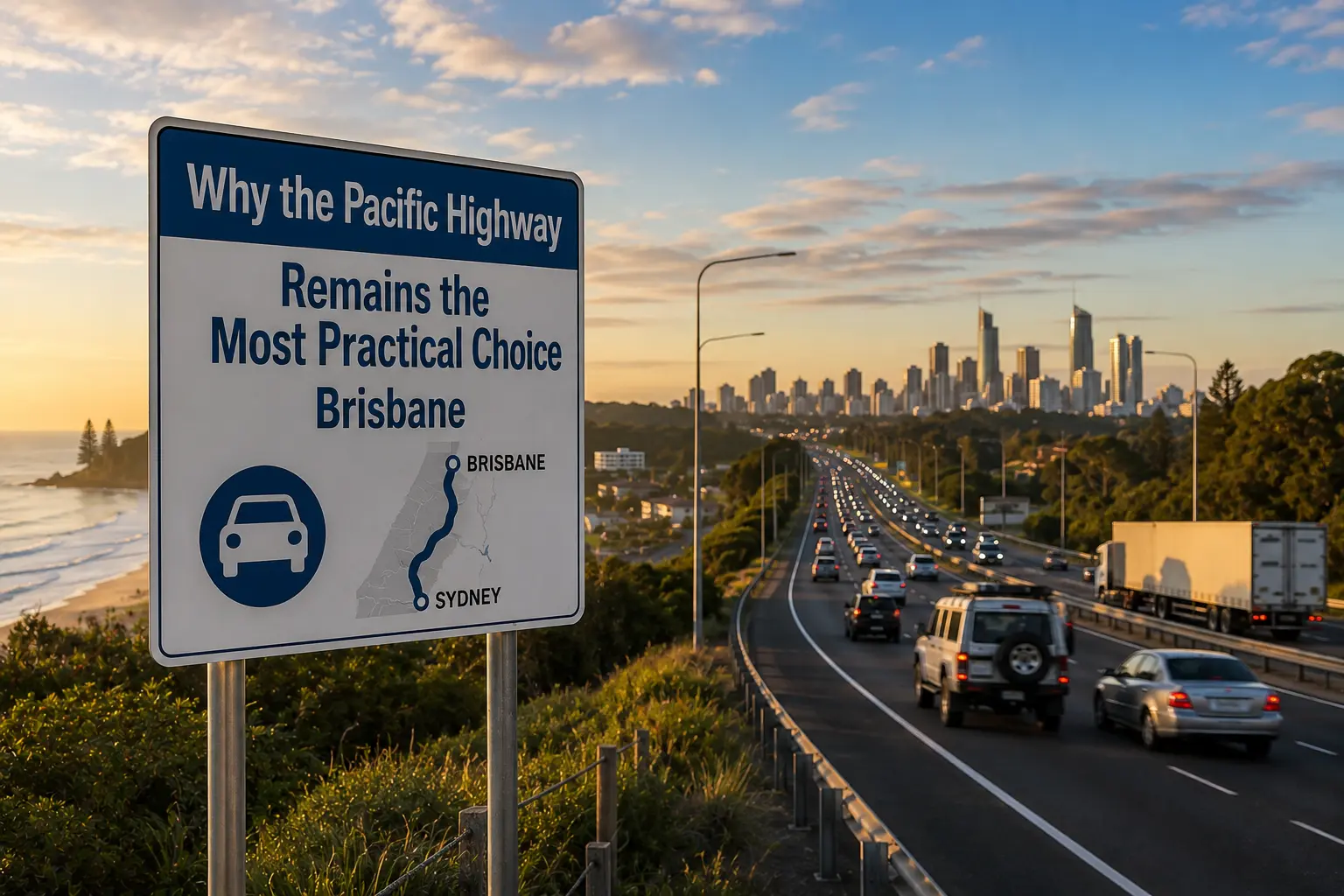
Why the Pacific Highway Remains the Most Practical Choice
For most people driving from Sydney, the Pacific Highway is the obvious choice because its a dual carriageway with plenty of services and pretty straightforward driving conditions.
Fuel is generally available every 60 to 100 km, which makes this route pretty well suited to all the different types of vehicles out there – petrol, diesel and electric.
Accommodation is plentiful around places like Port Macquarie, Coffs Harbour and Byron Bay – and in those towns you’ve got a good selection of places to eat and things to see too.
I reckon it’s a good idea to focus on a few of the best spots along the way rather than trying to cram in as many as you can – that way you can enjoy the drive without turning every day into a mad dash against the clock. I’d recommend:
- Stopping for breakfast or lunch in the Hunter Valley.
- Checking out South West Rocks and Trial Bay Gaol.
- Taking a look at Coffs Harbour and the Koala Hospital.
- Driving past and then exploring Waterfall Way and Dorrigo National Park.
- Doing an overnight stay in Byron Bay.
- Taking a look at Burleigh Heads before heading into Brisbane.
This approach keeps the drive relaxed without turning every day into a race against the clock.
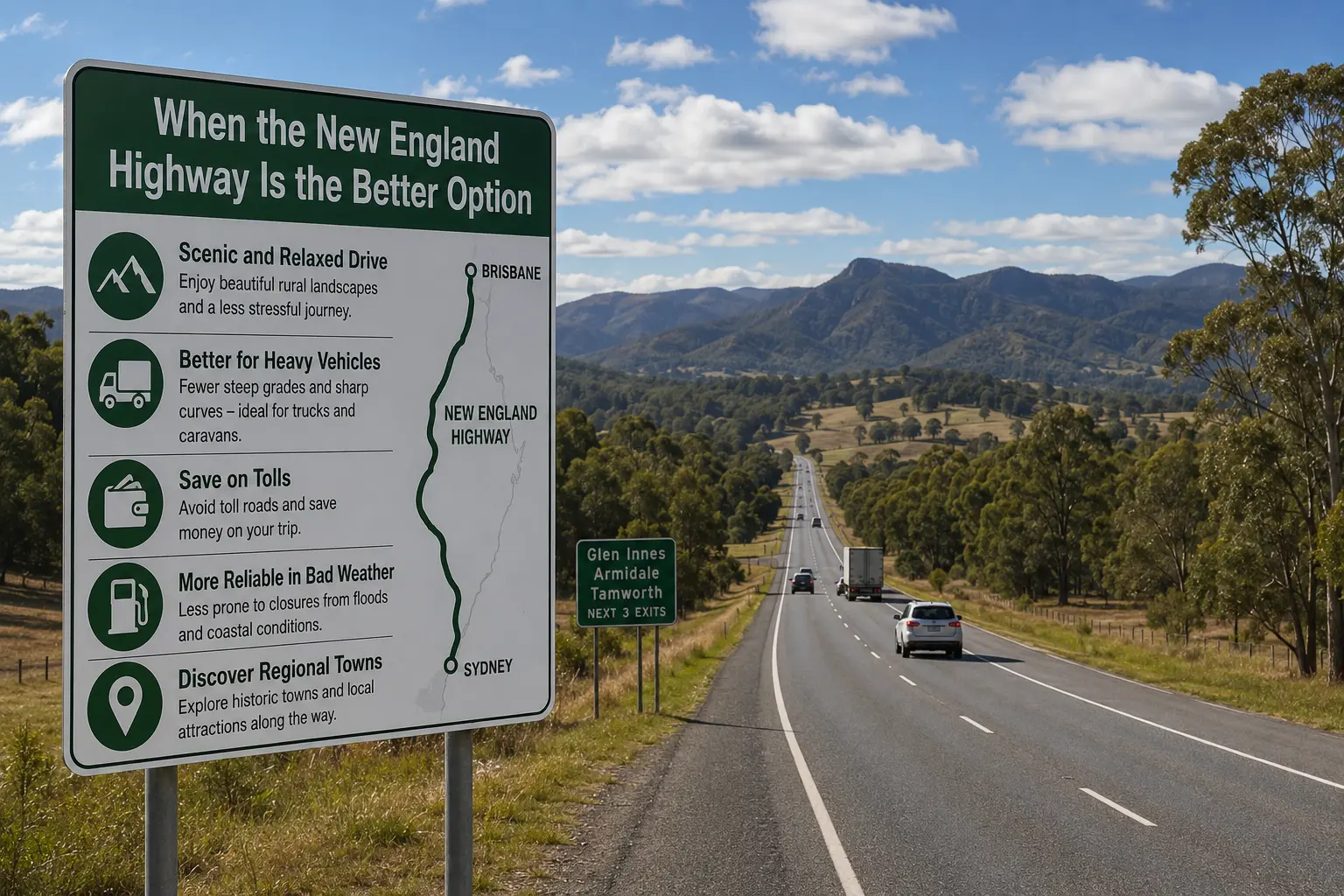
When the New England Highway Is the Better Option
If you’d rather drive through country towns and enjoy milder weather, the New England Highway is probably the way to go. Although its a bit longer than the Pacific Highway, the traffic flow tends to be quite a lot lighter, so you can make up for the extra distance in the end.
If you’re driving through around Armidale, be prepared for the elevation to rise to over 1000m, which can make for cooler summers and pretty chilly winter mornings. Also, you’ll generally find that accommodation prices are a bit lower in country towns, which can be a big advantage if you’re on a budget or planning a return trip.
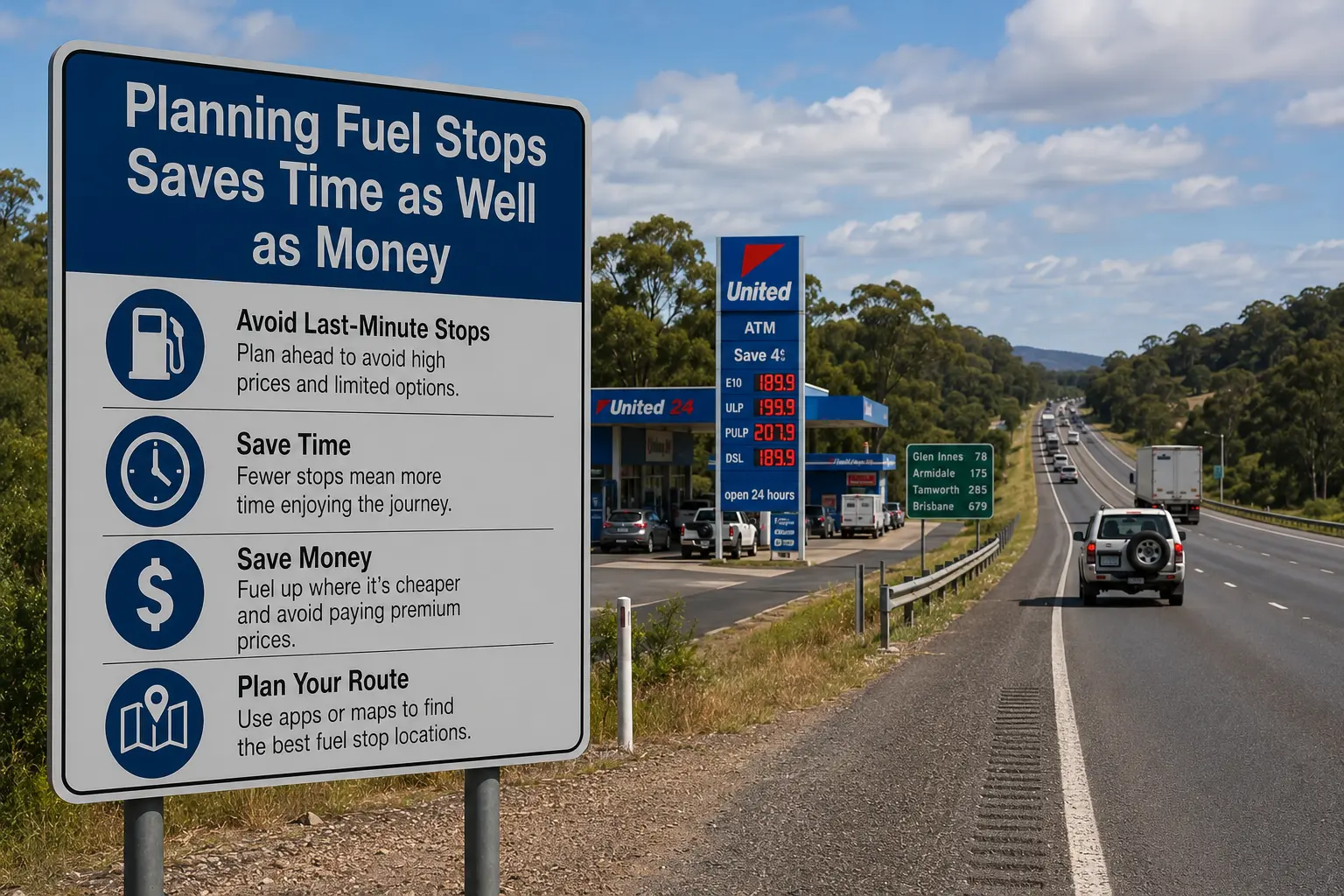
Planning Fuel Stops Saves Time as Well as Money
Planning your fuel stops in advance is a good idea – not just for your wallet but also for your time and stress levels. I find it’s a good idea to fill up when the tank is about a third empty to avoid getting caught out when the light comes on.
Large towns like Taree, Port Macquarie, Coffs Harbour, Ballina, Dubbo and Goondiwindi tend to have lower fuel prices than the smaller tourist towns you’ll find on the coast.
And if you’re driving an electric vehicle, you’ll be pleased to know that the Pacific Highway has reliable fast-charging along the way – generally every 120 to 180 km. Inland charging options are getting better but still need a fair bit of planning, so it’s a good idea to download a charging app before you go.
Choosing Overnight Stops Based on Driving Hours
Planning your overnight stops around the number of hours you’ve been driving is probably a good idea – it makes the trip safer and more enjoyable. Most people can manage to drive for between 6 and 8 hours a day before they start feeling exhausted.
| Accommodation | Typical nightly cost (AUD) |
|---|---|
| Motel | $140–220 |
| Caravan park cabin | $90–180 |
| Powered caravan site | $45–70 |
| Budget hotel | $120–190 |
Port Macquarie is a good choice for families who want to knock off a shorter first day, while Coffs Harbour and Byron Bay are more suited to couples just looking for a chill overnight stop. Caravanners, on the other hand, tend to prefer bigger holiday parks around Ballina and Yamba as they’re easier to get to than city stays.
If you are travelling during Christmas, Easter or school holidays, you really need to book your accommodation well in advance because regional motels and caravan parks fill up in no time.
Driving Conditions Change
Autumn and spring are usually the best times to take a drive from Brisbane – days in south-east Queensland sit pretty at around 22-28°C.
Summer’s when you can expect the holiday traffic to really be on, plus the afternoon storms and high humidity can make for a pretty uncomfortable drive – its much better on the coast, but inland its a different story with colder mornings and fog or frost. Heavy rain also brings the risk of flooding or road closures, particularly inland routes, so it pays to check road conditions before heading off.
And if you’re thinking of heading to Brisbane around Christmas, Easter or long weekends, be aware that traffic coming in on the M1 can easily add an extra 60-90 minutes to your journey.
Staying Safe Means More Than Following the Speed Limit
Safe long-distance driving is just as much about managing fatigue as it is about obeying the speed limits. You really should take a break every two hours, and Driver Reviver sites are usually set up during Easter, Christmas and busy travel periods, offering free tea, coffee and rest areas.
I also try to avoid driving between sunset and sunrise whenever possible. Roos, wallabies and livestock are a lot more active during those hours, especially out in the west of the Great Dividing Range.
Mobile reception is usually fine along most of the coastal highways, but inland its a different story- patchy coverage. Downloading offline maps such as Organic Maps alongside Google Maps is always a good idea if you are heading off the beaten track.
Scenic Alternatives

Common Road Trip Mistakes I See Travellers Make
At the end of the day, most Brisbane road trip headaches come down to planning, not whether you’re a good driver.
Trying to cram Sydney to Brisbane into a single day is a recipe for disaster – add meal breaks, fuel stops & traffic & you’re bound to end up exhausted. Breaking up the drive over two or three days is a heck of a lot safer and way more enjoyable.
Overpaying for premium fuel in tourist towns because you forgot to fill up in a bigger regional centre is another common mistake – and many visitors also make the wrong assumptions about mobile coverage. That’s where downloading offline maps before you hit the road really comes in handy.
And don’t even get me started on underestimating Brisbane’s weekday traffic! If you’re planning to arrive between 6:30–9:00 am or 3:30–6:30 pm on the Pacific Motorway (M1), Gateway Motorway or in the CBD, you can bet your bottom dollar your travel time is going to be a lot longer than you think.
Final Practical Takeaway
Brisbane road trips are all about what you want to get out of the experience. The Pacific Highway is perfect for people who like to stop off at the beach, grab some food and have easy peasy navigation. The New England Highway, on the other hand, offers you a more laid-back drive with a chance to explore some country towns and often a lower price tag for accommodation.
Whichever route you take, having a realistic idea of how far you can drive in a day, not trying to skimp on fuel and getting some decent rest will have a lot more of an impact than just following the GPS for the shortest route. And honestly, treating the drive as part of the holiday rather than just a means to an end makes all the difference to how enjoyable it is. If you’re planning on spending some extra time in the city when you get there, there are some great Brisbane tours available from Autopia Tours that can give you a taste of the region without having to worry about driving yourself.