Can you catch a glimpse of the Southern Lights from Uluru? Only when the stars are aligned just right – we’re talking about those super rare and intense solar activity events. Otherwise, the Aurora Australis tends to stay far, far south – around Tasmania, southern parts of South Australia, Bruny Island and bits of New Zealand. Ulurusites itself is just too far north for a spontaneous aurora display, even with those famous pitch-black desert night skies.
That bit gets glossed over by most travel blogs – they’ll show you these dramatic shots of a green glow above a red desert and make you think the Southern Lights roll in over the red centre every other week. But that’s just not true. I’ve been guiding groups around the Northern Territory for years, and I can count on one hand the number of genuine reports of low-latitude aurora sightings I’ve had near Uluru.
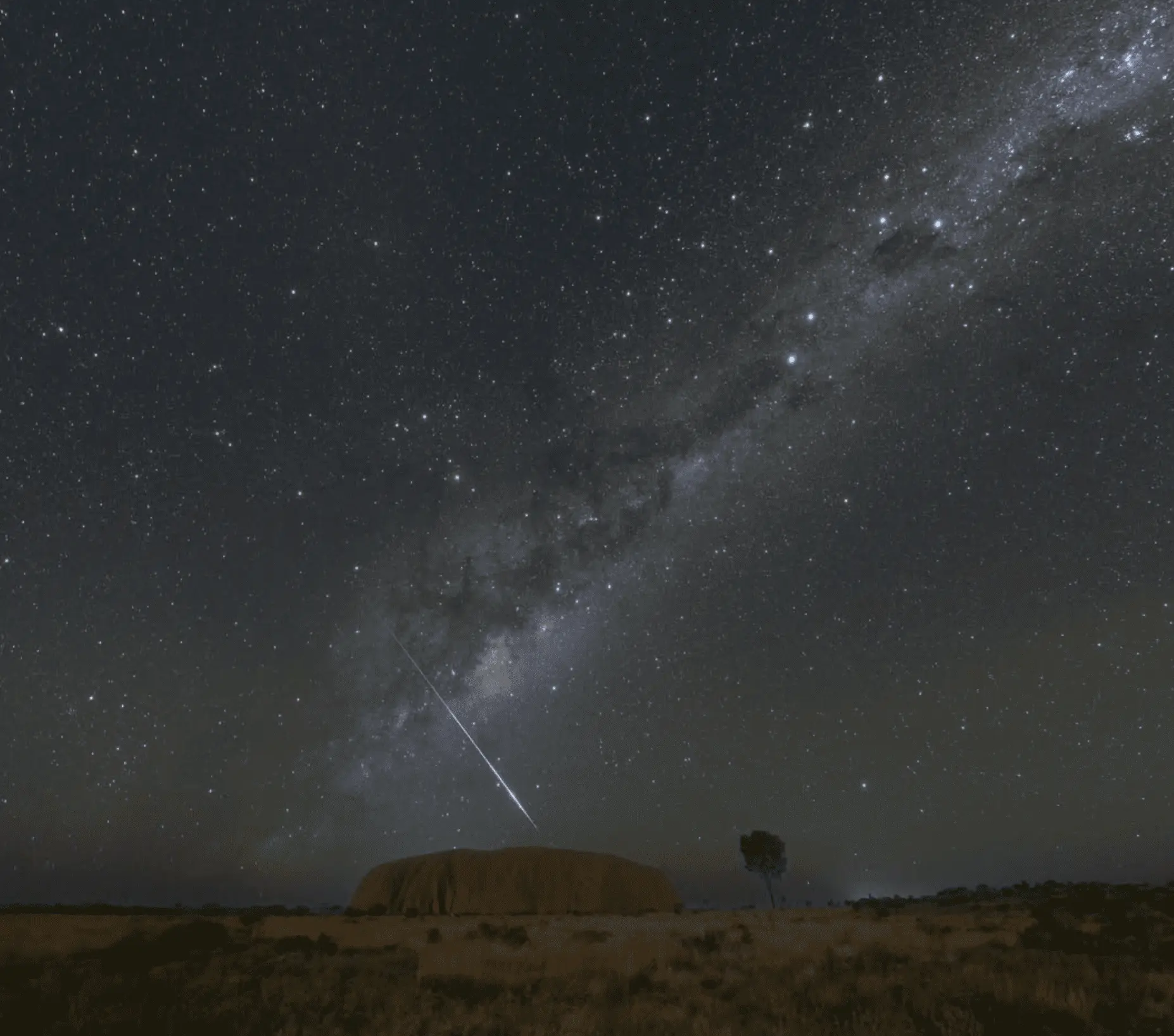
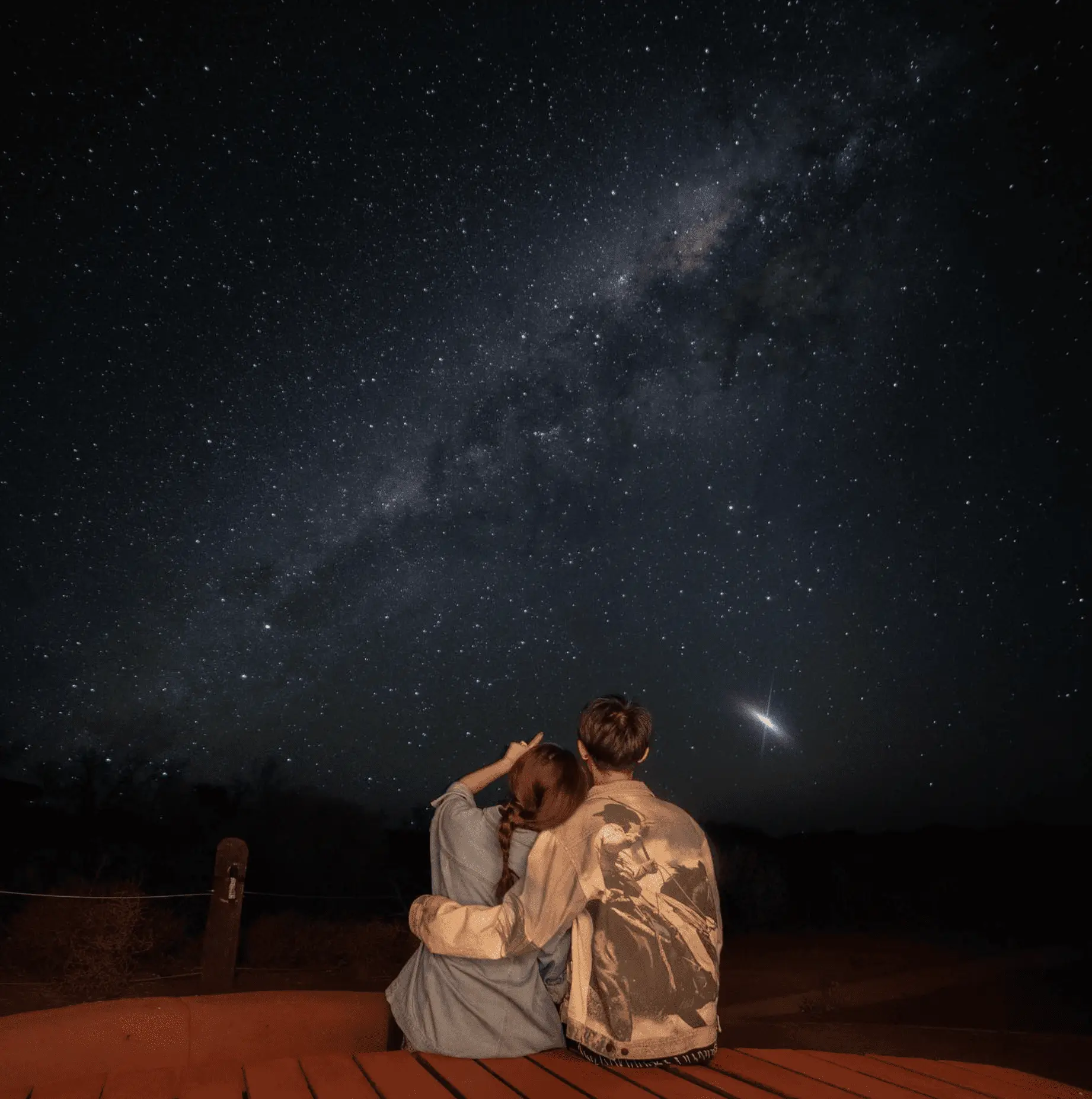
The thing is, though, the night sky around Uluru is just so ridiculously gorgeous that most people stop worrying about seeing the aurora after their first proper desert night. The stars alone are worth the trip. When I first camped out there all those years ago, I remember some bloke from Melbourne turning to me and saying, “Fair dinkum, that can’t be real,” while staring up in awe at the Milky Way. He wasn’t wrong either.
And if you do manage to time it right and catch a geomagnetic storm while you’re there? You might just get lucky enough to see one of Australia’s most elusive sky shows.
Why Uluru is Outside The Regular Aurora Zone
The Southern Lights are a product of charged particles from the solar wind colliding with Earth’s atmosphere near the magnetic poles, where oxygen atoms and nitrogen molecules put on a light show. That process relies on a few things: Earth’s magnetic field, solar flare activity and the solar cycle. During the solar maximum period, the Sun lets off bigger and better solar flares, which in turn lead to bigger space weather and a higher chance of getting a good view of the aurora.
But even with all that, latitude is still everything.
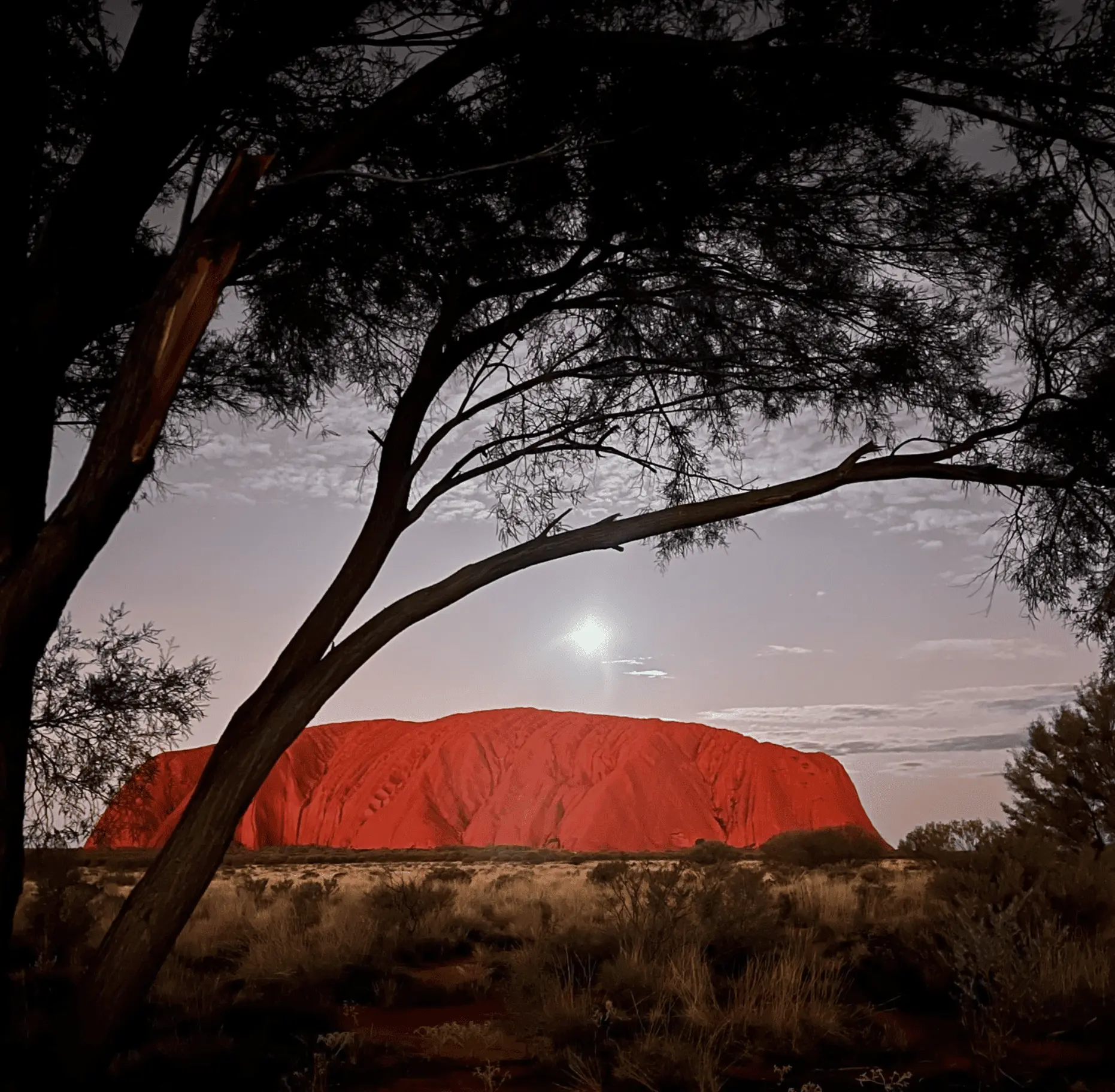
Uluru is roughly 2,750 miles north of Tasmania. Even when the lights are put on full display down in the south, Uluru just can’t get a good view of it. That’s why aurora chasers often head to Bruny Island or southern NZ instead of trying to catch a glimpse in the NT.
What Most Travellers Get Wrong About Aurora Viewing
Lots of people assume that if the skies are pitch black, you’ll have an amazing view of the aurora. Not quite – it’s a little more complicated than that.
Dark skies are helpful for seeing auroras, but they’re not a magic ticket to seeing one. You still need a strong geomagnetic storm to get the lights dancing way up north. That’s why you can stand under some of the darkest skies in the world at Uluru, and still go years without seeing anything even remotely aurora-like.
Another thing that catches travellers off guard is just how faint auroras can be in Australia. Those stunning photos you see from Iceland on Instagram? Don’t expect to see them in the flesh – a lot of the time, Australian auroras look more like a faint red glow or a pale haze, unless you’ve got a camera set to long exposure.
I’ve had people swear blind that they’ve seen an Alien aurora near Kata Tjuta, only to find out it was just some cloud reflecting the glow of the campground lights a few miles away. It happens more often than you’d think.
When Your Odds Improve
The best time to see the Southern Lights from Uluru is during the periods of intense solar activity that happen when the solar maximum is kicking in. Scientists track this stuff using space weather maps, aurora forecast systems, and real-time map monitoring tools.
The thing is, even during the most active periods of the solar cycle, severe geomagnetic storms are still pretty rare, according to the Australian Bureau of Meteorology Space Weather Services.
Here’s the catch most tour operators won’t exactly spell out –
| Aurora Factor | Reality Around Uluru | What Travellers Expect |
|---|---|---|
| Dark skies | Excellent | Excellent |
| Aurora frequency | Extremely rare | Occasional |
| Best viewing months | Winter and dry season | Any time |
| Naked-eye brightness | Usually faint | Bright green curtains |
| Photography results | Better than the human eye sees | Same as a camera |
| Travel reliability | Not predictable | Easy to plan |
One thing that’s really stood out to me over the years, while leading groups with Uluru Ayers Rock Tours, is just how fast people’s expectations flip on their head once they actually get to see the outback sky for real. People show up talking about tracking down the aurora, and next thing you know, they’re all about the silence, the stars and that weird feeling of staring out at a horizon with no buildings in sight for hundreds of klicks.
Desert Skies That Put Expectations To Shame
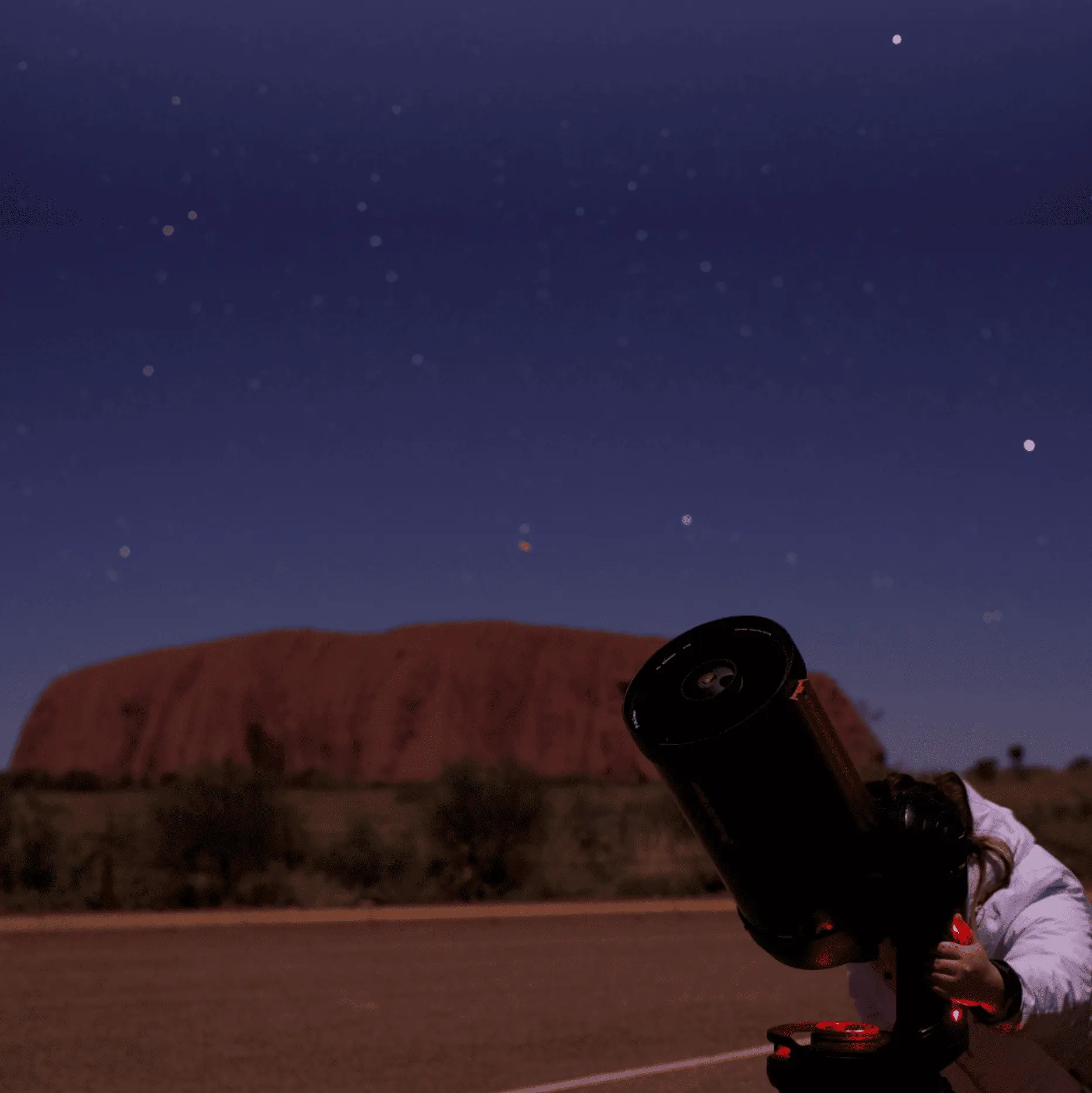
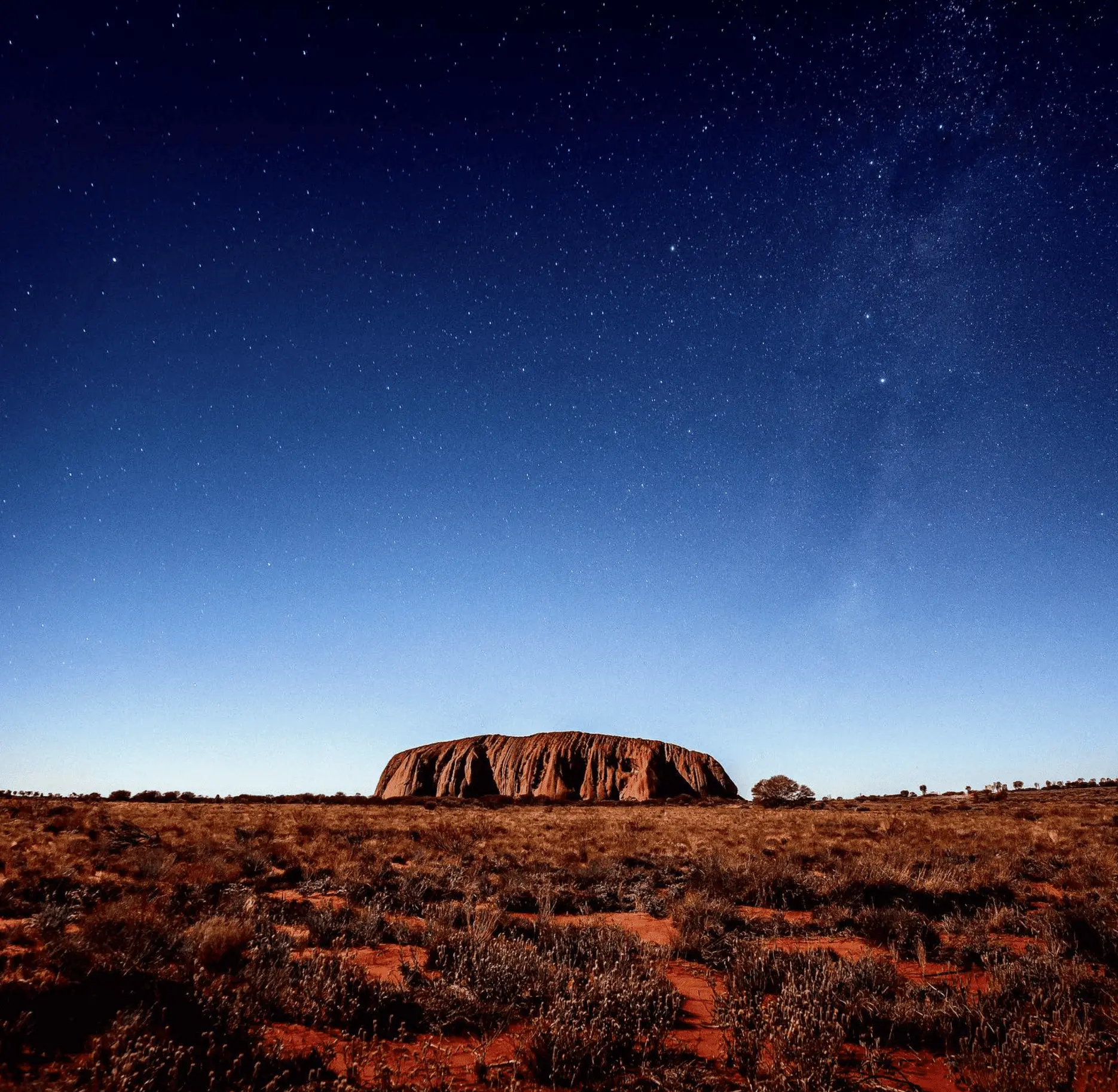
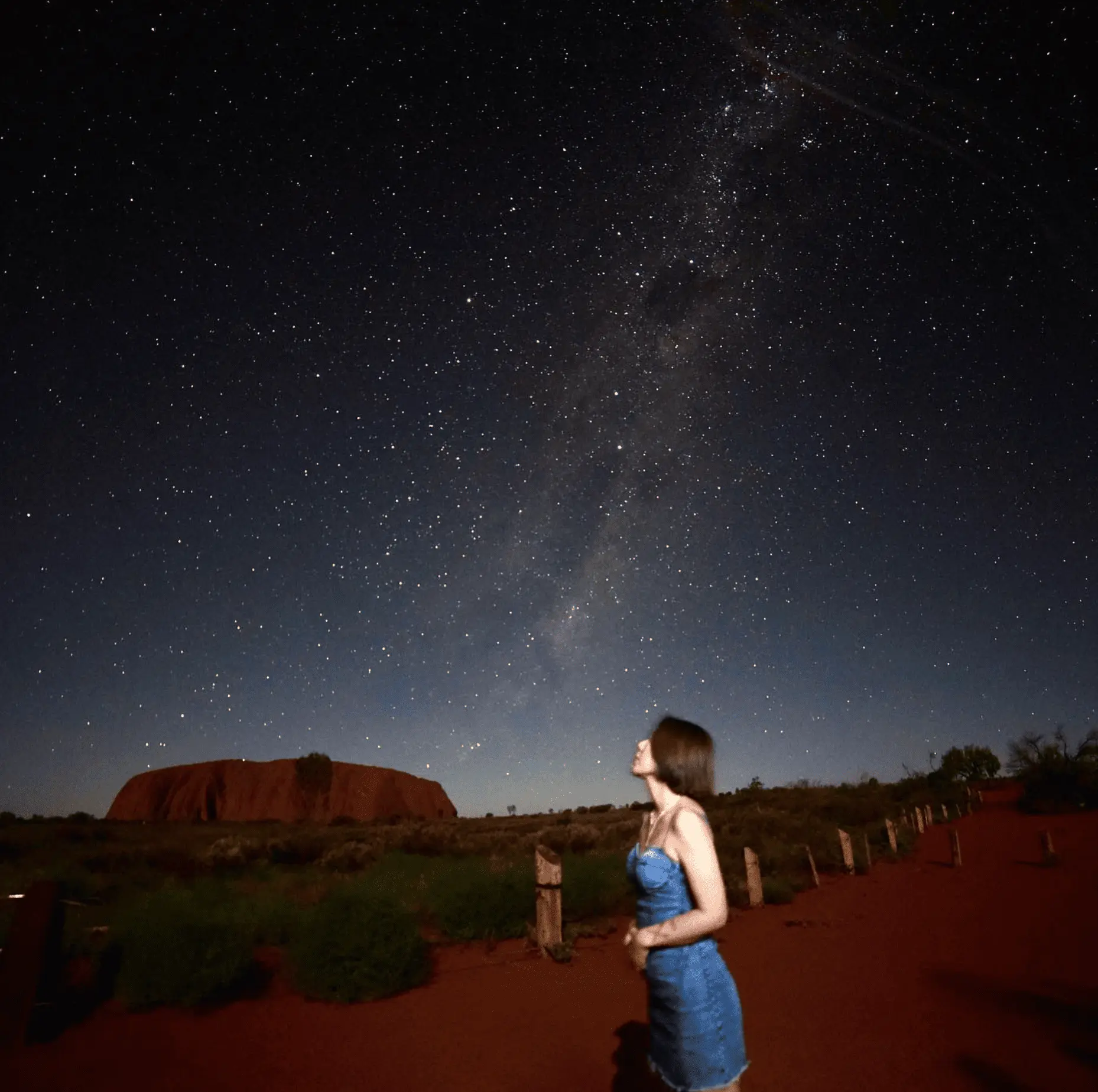
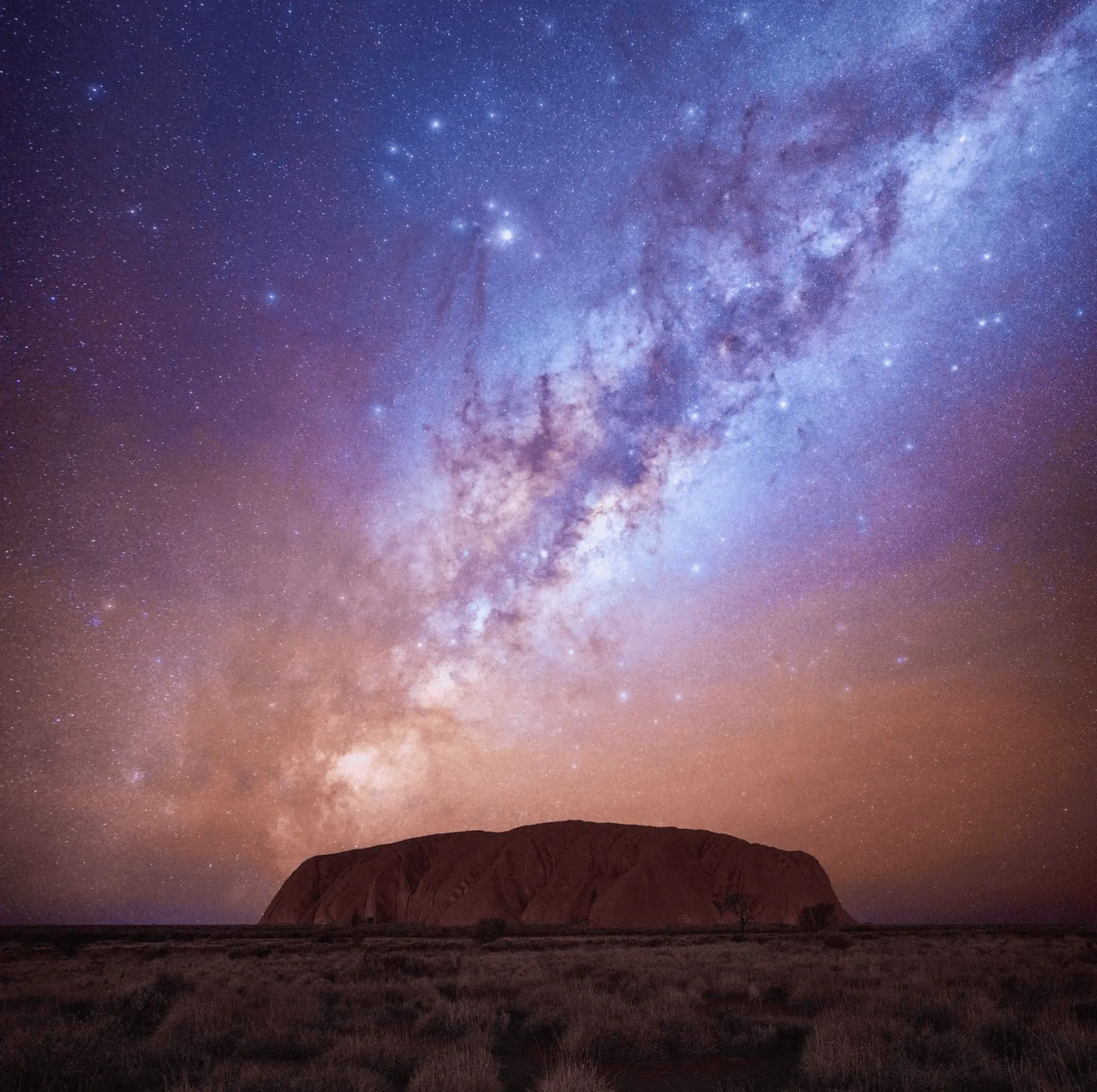
Even without the Aurora Australis showing up, Uluru still delivers some of the best stargazing Australia has to offer. It’s dry air, low humidity and a complete lack of light pollution that make for top-notch conditions for night photography and astrophotography – conditions that’ll often outdo what you find elsewhere.
What catches people off guard at first is just how massive the sky feels. The flat country stretches out in every direction – and once the last of the tour buses has gone, the desert is as dark as it gets.
Setting Up For Night Viewing - You Don't Need To Go Mad
You don’t have to rough it to get the most out of the Uluru skies. Most of the easily accessible viewing spots will still do the trick, so long as the weather stays clear.
| Viewing Area | Access Details | Best For | Reality Check |
|---|---|---|---|
| Talinguru Nyakunytjaku | Sealed road, 15 mins from resort | Sunset into stargazing | Popular and sometimes packed |
| Kata Tjuta Dune Area | 40–45 min drive from Yulara | Wide horizons | Cold and windy at night |
| Lasseter Highway pull-offs | Free roadside stops | Low light pollution | Watch for road trains |
| Remote campground stays | Varies by property | Long exposure photography | Facilities can be basic |
Parking near official viewing areas is pretty straightforward on most nights, apart from the swarm of people who turn up for sunrise and sunset during peak dry-season months. If you want to capture the quiet of the aurora or some decent astrophotography, then try sticking around after the crowds clear out.
A lot of people underestimate just how chilly desert nights can get between June and August. I’ve seen folk arrive straight from Darwin in their singlets, convinced that they’re ready for the Territory. By midnight, they’re bundled up in every towel they’ve got, lookin’ miserable by the camp kitchen microwave.
Practical Timing, Costs, & Trip Logistics
Getting to Uluru is probably easier than most first-time visitors think it’ll be, but don’t get too cocky – those distances in the Red Centre can be a real killer.
You’ve got flights into Ayers Rock Airport from Sydney, Melbourne, Cairns and Alice Springs running fairly regularly. And, of course, there’s still plenty of people driving out to see it for themselves, especially if they’re combining the Stuart Highway with the rest of the outback routes.
From Alice Springs, expect about 4-5 hours driving time to Uluru, depending on how many fuel stops you need to make, whether there’s any roadworks about, and whether your mates need to pull over every five minutes to take photos of camels.
Rough Costs To Budget For
Word is, Uluru isn’t exactly a cheap destination any more. That’s a bit of a surprise to a lot of people.
So here’s what you might be looking at for daily costs :
- National park entry: around AUD $38 per adult
- Mid-range accommodation in Yulara: AUD $280-450 per night
- Campgrounds: AUD $45-65 for powered sites
- Basic pub grub: AUD $28-45
- Fuel prices: are higher than what you’d pay in city centres
- Guided astronomy tours: AUD $95-220 per person
If you’re thinking of joining Uluru Ayers Rock Tours during peak dry season, book early – good operators fill up quickly between June and August.
I’ve seen some people actually spend more time planning a Grampians Tour than a remote NT trip that involves driving hundreds of kilometres of desert. The Red Centre deserves some proper planning.
Differences Between Wet Season & Dry Season
Seasonality is everything in the Northern Territory – it’s not just about comfort, it’s about whether you can even see a thing, road safety, and overall experience.
During the dry season, the skies are clearer, humidity stays down, and the night temps create perfect viewing conditions – which makes it the perfect time to chase aurora.
The hotter months between November and March can bring on clouds, storms, heat above 40°C, and all sorts of nasties for campers.
What Summer Really Looks Like - Expectation vs Reality
Expectation:
Breathtaking hot desert sunsets and balmy warm evenings that just make you want to hang out by a fire all night.
Reality:
Blistering afternoons that feel like you’ve opened the door and stuck your head under a hairdryer all day, warm gusts of wind that will frizz your hair in a heartbeat, swarm after swarm of aggressive flies and then, at the drop of a hat, a storm will roll in, bringing rain that’s almost horizontal and leaving you feeling bruised.
I still remember watching some poor bloke get his gear set up for some fancy night photography a few years back in January – maybe it was further back, I don’t know – it was just one of those summer nights where the storm rolled in without warning. The rain is pretty much bucketing down sideways. Twenty minutes later, his brand-new tripod lay in the dirt, and his sleeping swag was soaked through. I reckon he was pretty down in the dumps by then
That’s what outback travel is all about – the bush is not exactly interested in your carefully laid plans, then suddenly going out the window.
Photography Tips From Experience
If you get lucky and end up in the midst of strong aurora conditions near Uluru, do pay attention – preparation is key here. You won’t have the luxury of messing about & learning settings as you go.
When I first started plugging away at trying to capture the desert sky, I managed to cock things up in just about every way possible: wrong ISO settings, batteries that had gone flat, lenses getting fogged up, dust getting into the sensor – you name it. One night out at Kings Canyon I wasted 20 minutes taking shots of what I thought was an aurora – only to realize afterwards that it was a mining light in the distance.
Camera Gear That'll Actually Help You Out
For aurora and night photography around Uluru, a camera with manual controls is your best bet. A wide-angle lens really comes into its own under outback skies (which are pretty darn spectacular).
Of course, phones can still take some half-decent snaps – especially if you’ve got a good night-mode app and a sturdy tripod to keep things stable. Just be aware that your expectations of what the camera will pick up are probably way out – long exposures bring in way more detail than your naked eye can take in.
Also worth checking: some aurora forecast websites and apps can be a bit temperamental if your browser has got the pop-up blockers set to ‘aggressive’. Which may sound a bit silly, but I’ve seen people miss out on forecasted spikes because their browser settings were blocking live updates
Who This Experience Suits
Uluru’s night sky experience is just right for folks who enjoy:
- Getting out and stargazing/ astronomy
- Remote landscapes that are a million miles from the hustle-&-bustle
- Quiet, peaceful travel experiences
- Photography, of course!
- Long-distance roadtripping
- Outback camping
But if you’re looking for guaranteed aurora conditions or the organised chaos of city-style tourism, then this probably isn’t for you. The best way to see what Uluru’s got to offer if you only have a day is to catch the sunset, then grab an evening sky experience & roll in just in time for sunrise the next morning. That way, you get to see the full majesty of the Red Centre without burning the candle at both ends.
If your mobility’s a bit limited, then just stick to the designated viewing platforms & sealed roads – some of the unofficial roadside pull-offs can get pretty rough.
Final Thoughts Before You Go
So, can you actually see the Southern Lights from Uluru? – not often, but yes, under the right conditions & a bit of luck. Would I actually recommend heading to Uluru just to try and spot the aurora in all its glory? – probably not.
That said, there are plenty of other places in Australia (Tasmania, Bruny Island, bits of South Australia & New Zealand) that have a way better bet for regular Aurora Australis sightings. But Uluru gives you something different – something more than just a tick on your photo checklist.
The Red Centre strips things right back. You get big skies, dusty roads, total silence and genuine darkness. No more staring at your phone because there’s something overhead worth looking at.
And every now & then, if the stars align just right & the space weather behaves itself, the desert sky will surprise you with something you never even thought you’d see. That’s the thing about the outback – the best moments are the ones you never even planned for.