In simple terms, they can snap shut tracks, lock off whole chunks of the Grampians National Park and send your accommodation plans up in smoke – particularly during the summer months – not to mention forcing you to make last-minute changes on the fly.
I’m Paul. I’ve spent a whole lot of years showing visitors how to navigate the fire-prone regions of Australia. The Grampians Region looks like a pretty idyllic place on a postcard, but out here, the bush is the one calling the shots. And if things turn for the worse, they can change fast – so you need to be ready to alter your plans at short notice.
When The Bush Calls Time On Your Itinerary
Bushfires don’t just affect one trail or viewpoint. They have a way of turning the whole landscape on its head – how you access the park, whether or not its safe to be there, and even how long you can stay.
Track Access And Closures You Can’t Ignore
When fire danger starts to rise, Parks Victoria shuts down areas quickly to keep you and everyone else, as well as the land, safe.
You’ll commonly see:
- Sections of the Grampians Peaks Trail are closed
- Access is blocked to spots like MacKenzie Falls, Reeds Lookout, and Hollow Mountain
- Restrictions across ranges such as the Victoria Range, Serra Range, and Mount Rosea
Even major hubs like Brambuk, the National Park and Cultural Centre, might scale back operations during high-risk periods.
I’ve had days where I thought I’d planned a great hike out of Halls Gap, only to get a last-minute rerouting before I even got my boots on: no warning, just a sign and a ranger doing their job.
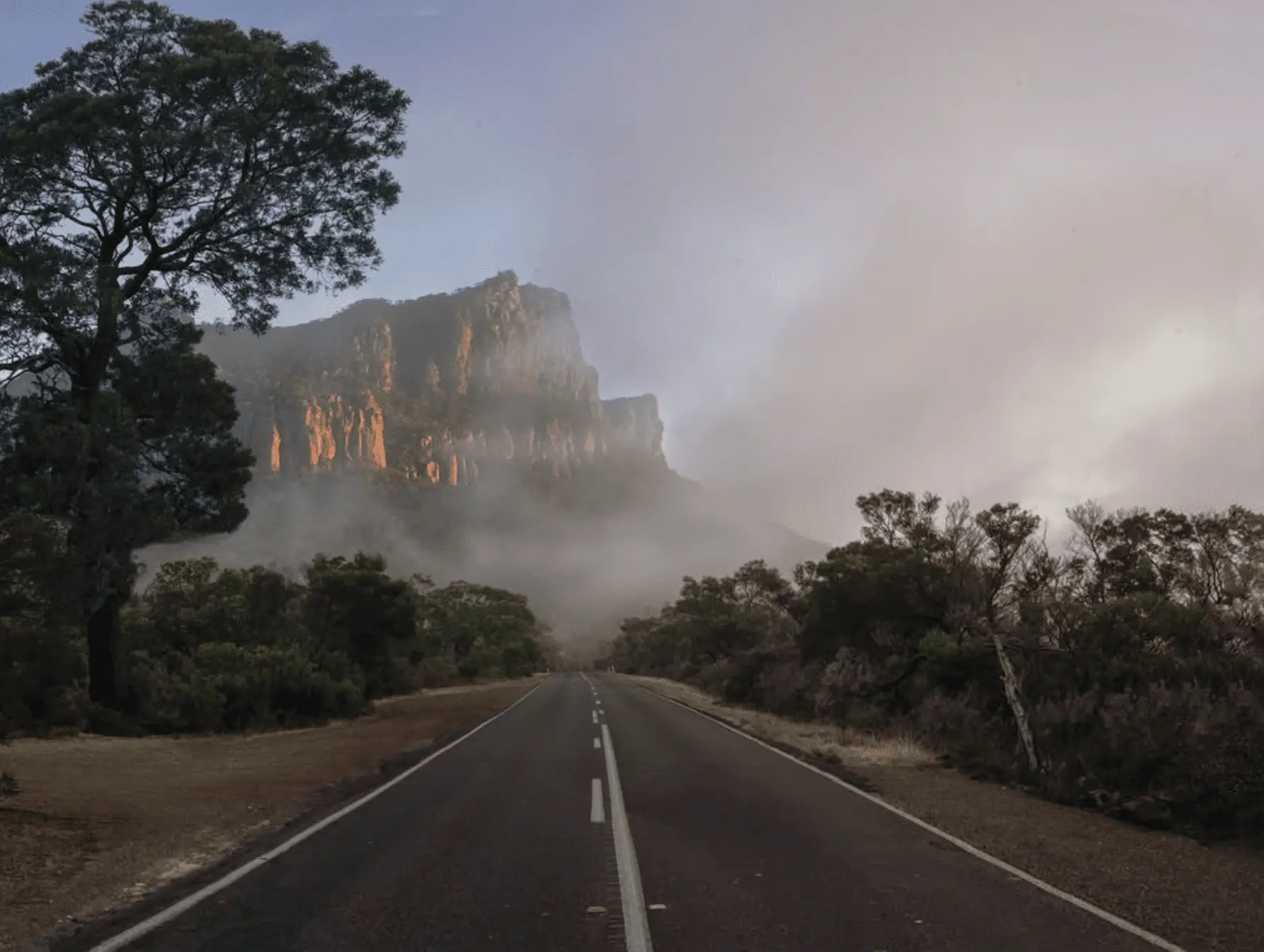
Getting In And Out Isn’t Always Straightforward
Picking The Right Season Makes All The Difference
The Grampians travel calendar is definitely not something you can apply a blanket rule to. If you get your timing right, you’re way less likely to run into trouble.
Summer: Peak Risk And Limited Access
Summer’s the time when things get really hot and dry – December through March -, and you can expect:
- Loads of Extreme Fire Danger Rating and even Catastrophic Fire Danger Rating days
- Total Fire Bans across the board. Don’t say nobody warned you.
- Whole park closures when things get really bad
It’s a recipe for disaster – hot winds combined with dry bush equal a bushfire risk that’s as high as it gets.
Shoulder Months: More Stable Conditions
Autumn and spring are a whole lot more relaxed. The weather’s more pleasant, the bush has a bit more moisture, and you can be fairly confident the park will be open.
No surprise that a lot of people choose to join in on a small-group Grampians National Park tour during these months. It makes sense – tour operators can actually plan a decent itinerary without having to spend all their time trying to figure out which bits of the park are open and which aren’t.
Winter: Quiet But Not Carefree
Where Most Trips Go Wrong
Bushfires can ruin a trip – but more often it’s because people just aren’t prepared for the reality on the ground.
Common Pitfalls That Catch Travellers Out
- Not keeping an eye on the daily fire danger ratings – because you reckon it’s all good till it’s not.
- Avoid a quick check on the VicEmergency app or website.
- Thinking ‘clear skies’ means everything is still going smoothly.
- Locking in super rigid bookings in the middle of peak fire season – because it’s ‘only just started’.
I’ve seen people stuck in Halls Gap, frantically trying to get some decent updates because they didn’t even bother ringing the Vic Emergency hotline or checking the Emergency Victoria website. That’s not exactly the best way to have a holiday.
How To Stay Flexible Without Overcomplicating Things
Simple Planning Moves That Pay Off
- Check alerts using the VicEmergency app, FireReady app, or CFA website
- Follow updates from Emergency Victoria and local fire agencies
- Book accommodation with flexible cancellation
- Plan alternative activities outside the park
- Monitor Bushfire smoke forecasts
And the thing is – tour operators like Great Ocean Road Tours are pretty good at adjusting itineraries on the fly when conditions change – which can really take the pressure off if things go wrong mid-trip.
What Different Fire Conditions Actually
Scenario Table: Conditions And Travel Impact
| Fire Condition Level | Park Access | Travel Impact | Recommended Action |
|---|---|---|---|
| Low–Moderate | Mostly open | Minimal disruption | Stick to your plan |
| High | Partial closures | Some delays | Adjust your route |
| Extreme | Widespread closures | Major changes | Focus on safer areas |
| Catastrophic | Fully closed | Trip cancellation | Avoid travel entirely |
These ratings guide decisions from agencies like Country Fire Authority.
Why Fire Behaviour Matters More Than You Think
Understanding how fires behave gives you a big advantage when planning a safe trip.
What Makes These Fires So Unpredictable
- Ember attacks can spread fires kilometres ahead
- Extreme heat can generate a pyrocumulus cloud
- Wind shifts can redirect fire fronts in minutes
Even if the flames are nowhere near you, the smoke and changing conditions can still make it a pretty bad idea to go out and travel.
Respecting Country While You Travel
Navigating The Region When Conditions Shift
Because of the way the Grampians are laid out, its not always easy to get from one place to another.
- Fires can isolate sections of the Grampians Peaks Trail
- Access to areas near the Glenelg River may be restricted
- Entry through Halls Gap can close while outer sections remain open
When that happens, that’s where a guided Grampians National Park tour can be a lifesaver – local operators have got all the inside knowledge on which alternative routes are safe to use when the usual paths are no-go zones.
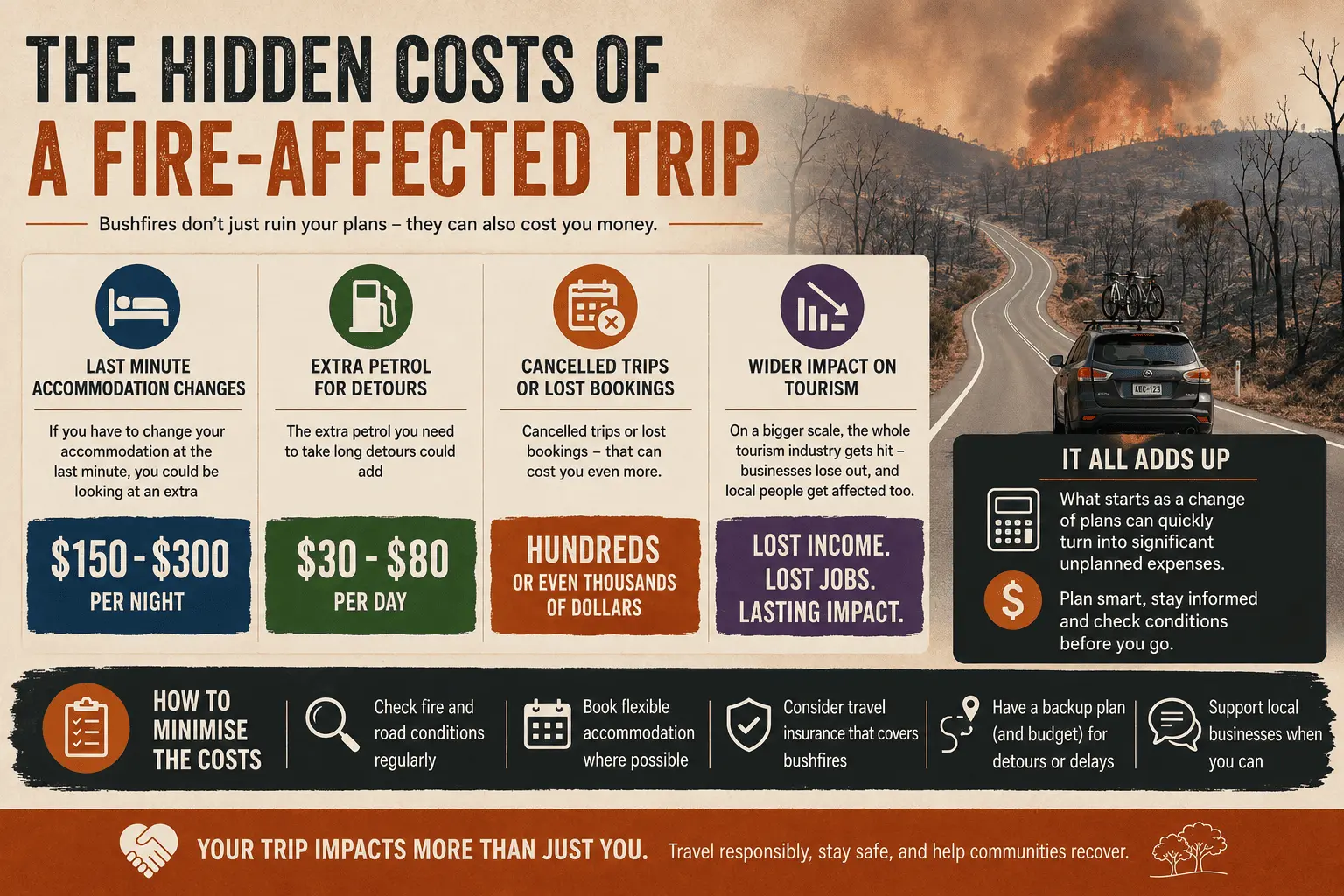
The Hidden Costs Of A Fire-Affected Trip
Bushfires don’t just ruin your plans – they can also cost you money.
If you have to change your accommodation at the last minute, you could be looking at an extra $150 to $300 per night.
And the extra petrol you need to take long detours could add $30 to $80 per day to the normal costs.
And lets not forget cancelled trips or lost bookings – that can cost you even more.
On a bigger scale, the whole tourism industry gets hit – businesses lose out, and local people get affected too.