I get asked this all the time when I’m talking to people along the Great Ocean Road, especially down around Apollo Bay – and its because people are trying to get away from the crowds and actually see some Aussie wildlife for themselves. Truth is, the Kennett River Koala Walk is still a dead cert for spotting koalas – but its hardly ever peaceful these days. For that proper, unspoilt Aussie bush moment where you might see some real wildlife in its raw form, well, there are loads of other spots where the only sounds you can hear are the wind rustling through the eucalypt trees and the odd rustling in the bushes.
I’ve spent years showing people around the Great Otway National Park and the whole of the Otway Coast area – and I’d say this: get inland, slow right down and forget the obvious spots that everyone else is going to – that’s where the real wildlife magic happens – especially when you avoid the signposted bus stops.
Find Quieter Bush Corridors Just Minutes From The Coast
The Great Ocean Road is famous for its big coastal attractions like the Twelve Apostles and Loch Ard Gorge near Port Campbell – but for actual wildlife encounters? You’re most likely to find that inland. Just 5 – 15 kilometres off the coast, you’ll hit proper native bushland where the animals can just get on with it as normal.
Larapinta Trail Tour
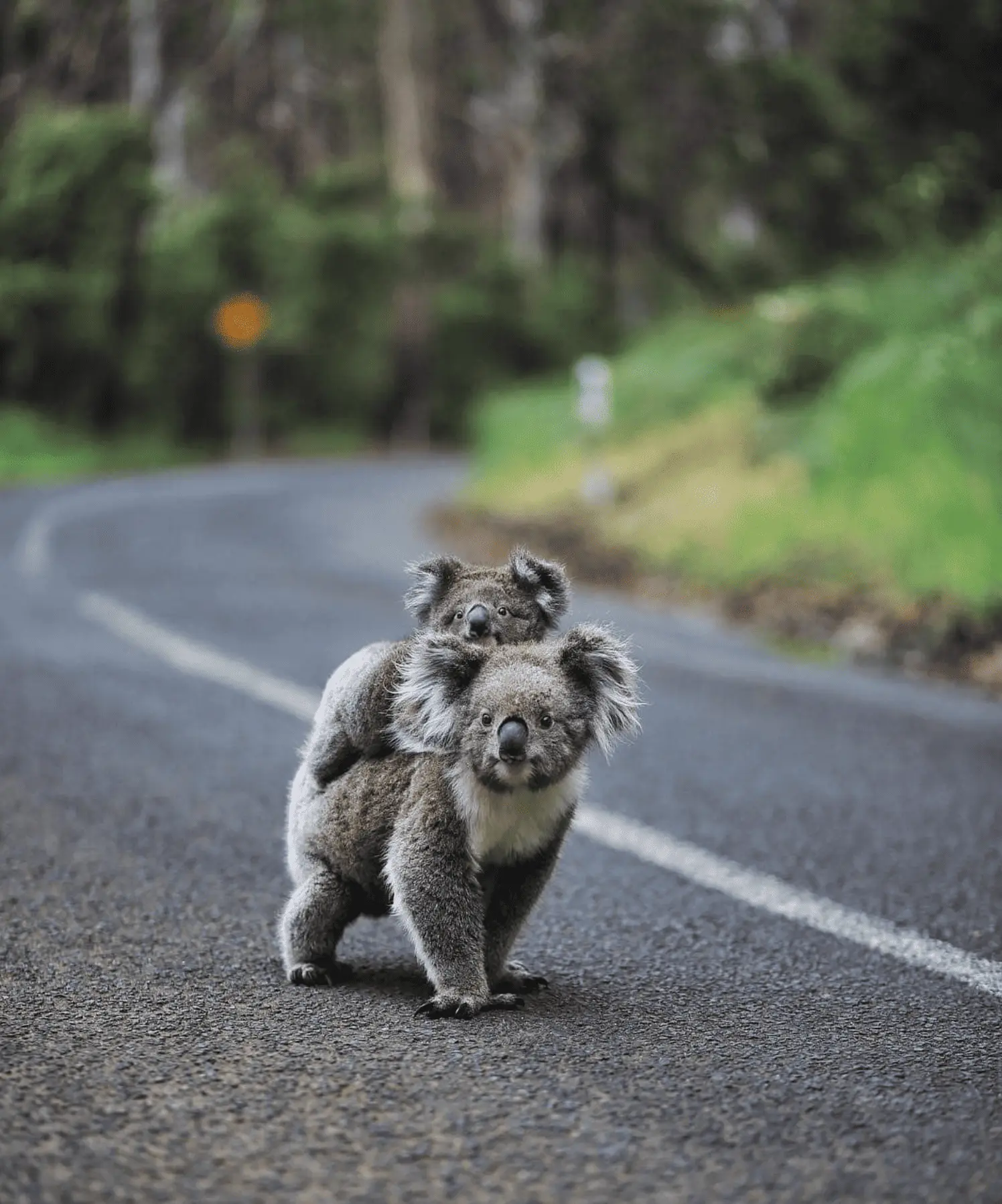
If I’m honest, there’s a spot that I’d rather you go to instead of Kennett River, and that’s Grey River Road near Grey River. The eucalypt trees here are perfect for feeding & resting for the local koalas, and because fewer people stop off there, they stay nice and relaxed.
You’ll notice the difference straight away. Its just so much quieter and less staged than all the other places. The koalas tend to just sit there quietly – high up in the trees, so you have to be looking for the shape – a big back or some bulk in the fork of a branch – not any over-activity. In fact, I’ve had visitors miss three koalas in the one tree just because they were looking for movement rather than shape. I reckon that’s the old tourist mindset – always looking for the ‘show’ – and that’s not what this is all about.
If you’re doing a 3 day Great Ocean Road trip, this is often the spot where it shifts from ‘sightseeing’ to proper, wildlife-spotting – unless you’re in too much of a rush.
Inland Otway Tracks – Where The Bush Takes Over
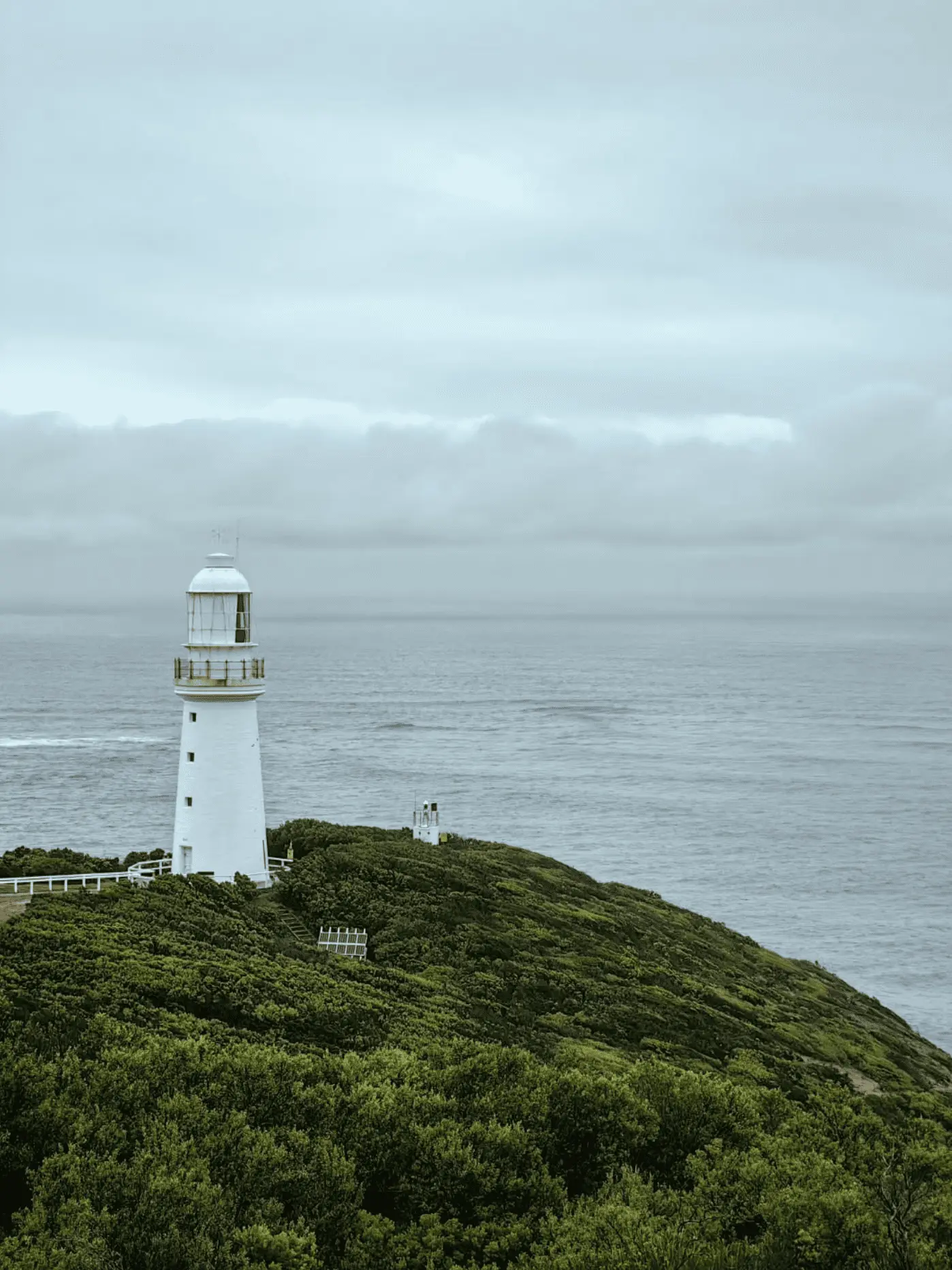
Head inland from Cape Otway and the area starts to get really dense and the air gets thick and damp – and you just get that peace that comes from being off the beaten track for kilometres at a time. There’s one set of backtracks through the Great Otway National Park that is perfect for wildlife – and that’s because the bush really comes alive in here.
Kangaroos grazing on the edges of the clearings are a regular sight – especially early morning or late afternoon. Wallabies just pop out of nowhere when you’re walking along – don’t get too surprised. Stick around into the evening, and you might even catch a boobook owl calling out from one of the trees – if you’re quiet, that is
Road conditions can be a bit rough after a bit of rain – and you won’t get any phone signal, but that’s all part of the deal. Keeps the crowds away and keeps the experience feeling real. That’s why we only bring people through here when we’re really about seeing the wildlife – its not a quick photo stop kinda place.
Tower Hill Wildlife Reserve – Consistent Sightings Without The Rush
Tower Hill Wildlife Reserve is a standout on this list – structured, easy to get around and as reliable as they come.
Located in a dormant volcanic crater just outside Warrnambool, you’ll find sealed roads, parking spots, and walking tracks right in there. Best of all, entry is still free – for now, 2026 and all that – but don’t be surprised if that changes. And the facilities are so straightforward to use, this place has to be one of the easiest wildlife spots to explore.
But the mistake most people make is they just don’t go far enough – literally. They stroll along the first little loop, catch a glimpse of a couple of animals and think they’re done. You get the better sightings by being willing to walk a bit further – and I mean a bit further – even just 20-30 minutes more. It gets quieter, and the sightings get better.
In terms of keeping an eye on things, this reserve has it down pat – emus are just hanging out, koalas are snoozing in gum trees, and the birdlife is always on show thanks to the protected native habitat of the place.
Lake Elizabeth – Slow Travel With Real Rewards
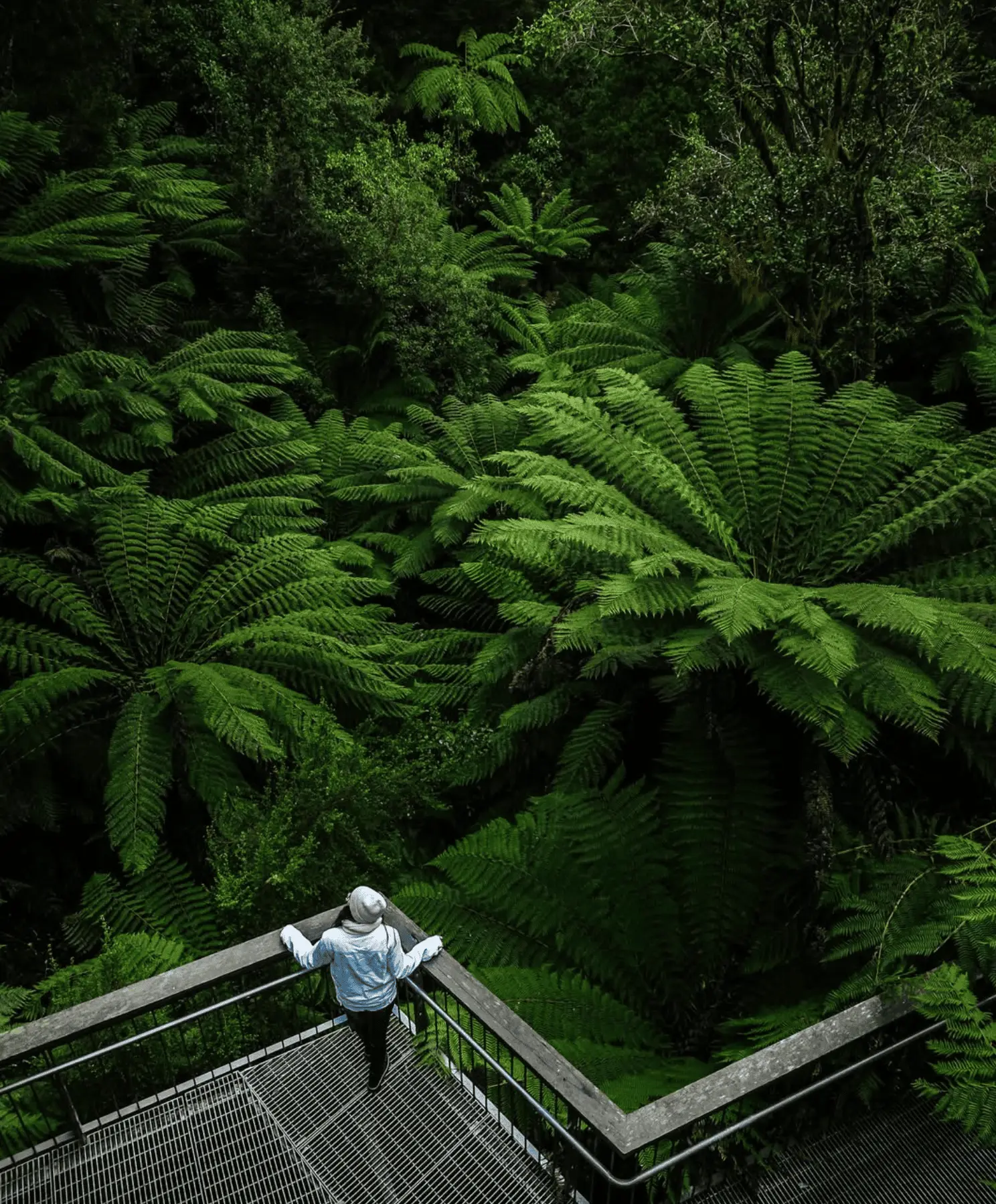
Remote Otway Coast Access Points – For Those Willing To Work For It
If you’re up for a real adventure, go off the beaten track, and you’ll find some proper off-grid spots on the Otway Coast. The road gets rough, the signs disappear, and it’s you against the bush. There’s some great wildlife to be spotted in this part of the world.
Kangaroos will often just graze near the campsites, not bothered in the slightest by the odd vehicle passing by. If you are around, you might also check out spots like Triplet Falls and Erskine Falls, which add another layer to the experience – and plenty of wildlife potential as well.
You’ll need to be prepared for the trip, though. Some of these roads are much better suited to 4WD, and the weather can cut access off pretty quickly, so be ready. But that’s exactly why these places are still so quiet.
The downside is that you might find that fuel stops are limited, mobile reception can be patchy, and the weather can change the access conditions overnight. You’ll want to budget for that – another AUD $30-$80 on fuel for the detours, and basic camping can set you back AUD $20-$40 a night.
Understand Timing To Boost Your Sightings
Timing matters more than location. Show up at the wrong hour, and you’ll see nothing but empty trees.
Here’s how wildlife activity typically breaks down:
| Time Of Day | Wildlife Activity | What You’ll See |
|---|---|---|
| Sunrise | Peak | Kangaroos, birds, and active wildlife |
| Midday | Low | Sleeping koalas |
| Late Afternoon | High | Grazing and movement |
| Night | Nocturnal | Possums, owls, glow worms |
Field studies across Australian habitats show animal movement can increase by 60–80% during dawn and dusk periods compared to midday (data current to 2024).
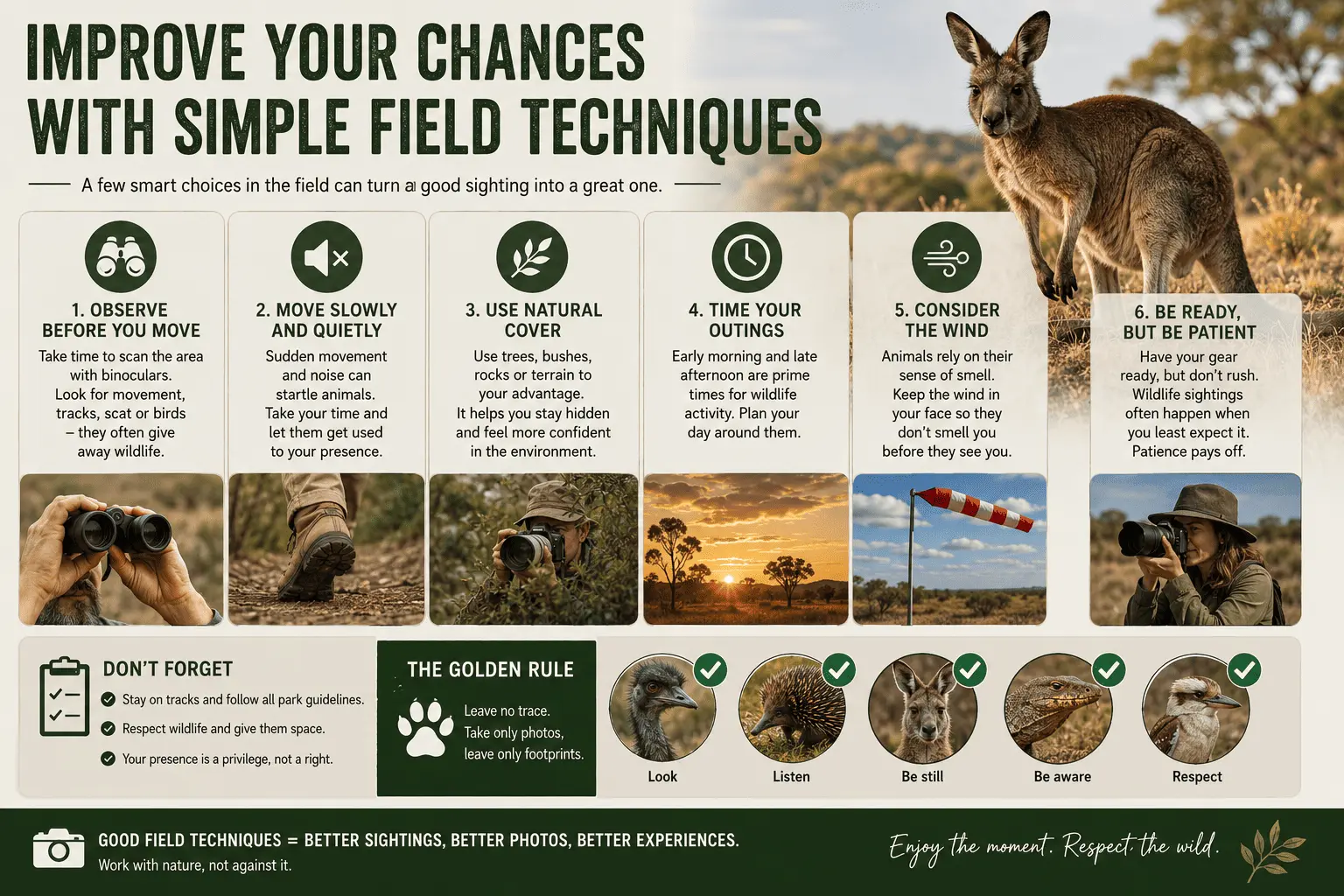
Improve Your Chances With Simple Field Techniques
Most people miss out on spotting wildlife because they’re always in a rush – not because its not there.
The Silent Spotting Checklist
- Drive at a pace of 40 km/h or less
- Stop often and turn off the engine – just sit there for a while
- Keep an eye on tree forks and branches – its surprising what you can spot
- Look for the overall shape and how things contrast with the surroundings
- Try to keep the noise down – its easier said than done, but it helps
Patience beats luck. That’s a fact.
Plan Your Route Beyond The Obvious Stops
Gibson Steps and London Arch are great places to see, but they’re not where you’ll find the wildlife. Think about it – the coast gives you great scenery, but the inland fringe is where you’ll find the best mix of access and wildlife. Go deeper, and you’ll find quieter encounters that are actually more rewarding.
That’s what a lot of people finally figure out by about halfway through a 3-day trip along the Great Ocean Road – the inland detours end up being the best bit, not the thing that’s on all the posters.
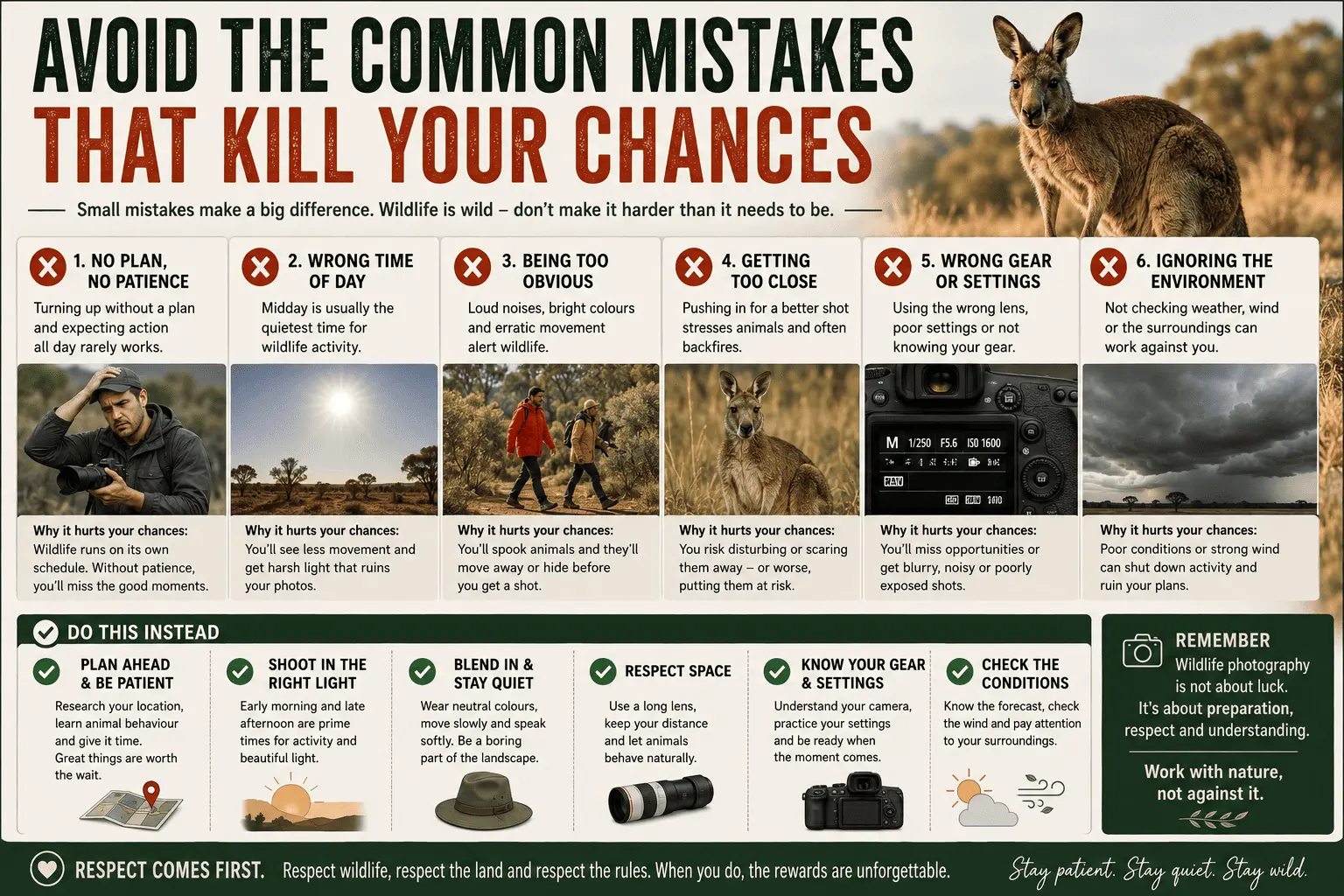
Avoid The Common Mistakes That Kill Your Chances
There are a few things that will kill your chances of wildlife spotting in no time:
- Driving too fast – wildlife spotting isn’t a race
- Going at the wrong time of day – you need to time it right
- Expecting to see things – wildlife spotting is never a guarantee
- Ignoring the weather – just because the sun’s out, don’t assume that all the wildlife will be out and about
Same road, same environment – and completely different results depending on how you approach it.
Why These Locations Deliver Better Encounters
Quiet environments are less stressful for the wildlife – that means you get to see them doing their thing. All the people and noise don’t stress the animals out, so you get to see more natural behaviour – like them eating, moving and interacting.
You’re watching real wildlife that’s not been set up to put on a show for you – its just Australian native animals being themselves.